Affiliate Disclosure: This post may include affiliate links. If you click and make a purchase, I may earn a small commission at no extra cost to you.
You may run into a pretty annoying issue on your Windows 11 PC. Someone during the cumulative update for Windows 11 Version 24H2 (KB5065426), the update wouldn’t install. It got stuck at around 50% or 100%; after a restart, it rolled back with a vague “something went wrong” message. Sometimes Windows displayed an error code such as 0x800f081f. Other times, it showed nothing useful at all.
After trying a few fixes and digging through forums and Reddit threads, I realized this is actually a very common problem. So here’s a breakdown of why it happens and what usually works.
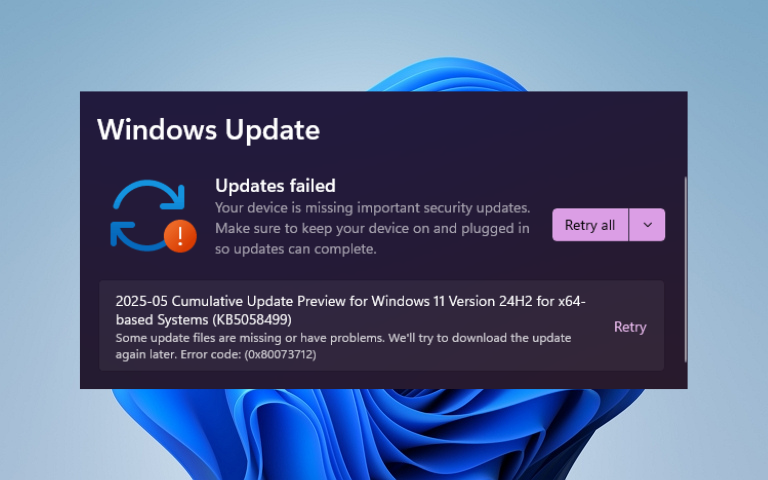
Why Does My Windows 11 Update Keep Failing?
There isn’t just one reason why Windows Update fails. In most cases, the problem is caused by corrupted system files, insufficient storage, update cache issues, or software conflicts.
Here are the most common causes behind Windows 11 update errors:
1. Corrupted system files
If important system components are damaged or missing, Windows may fail to install updates correctly.
2. Insufficient storage space
Feature updates and cumulative updates require free disk space. If your system drive is nearly full, the installation may fail.
3. Windows Update cache issues
Incomplete or corrupted update files in the cache can cause repeated failures.
4. Driver or software conflicts
Outdated drivers, third-party antivirus, or VPN software can interfere with the update process.
5. Internet or service problems
Unstable connections or malfunctioning update services can interrupt downloads or installations.
How to Fix Windows 11 Update Keeps Failing
The good news is that most update failures aren’t that serious. In many cases, a few built-in tools or simple steps can fix the issue.
Here are the methods that worked for many other users, starting from the easiest ones, and for me.
Fix 1. Restart Your Computer
Even though it may seem obvious, restarting your PC is often the fastest way to resolve Windows Update issues. Many small conflicts, temporary file errors, or stuck services can prevent updates from installing. A restart gives your system a fresh start and can resolve many minor issues without any technical steps.
To restart your PC and check for updates:
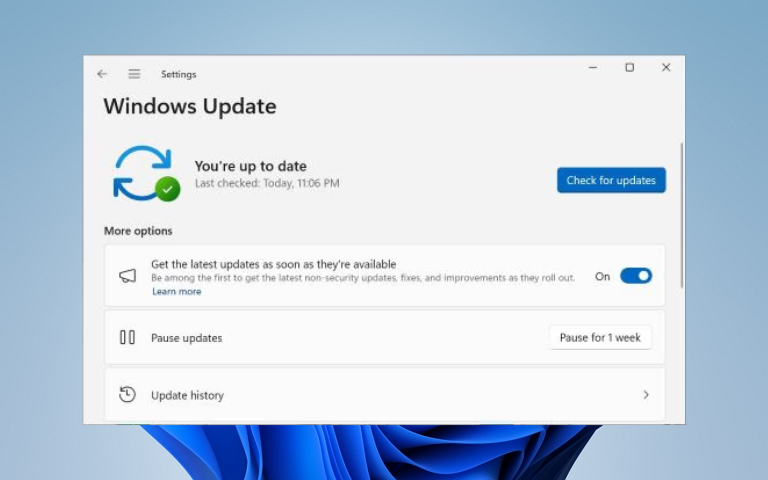
Step 1. Restart your Windows 11 device
Step 2. Go to Settings
Step 3. Open Windows Update
Step 4. Click Check for updates
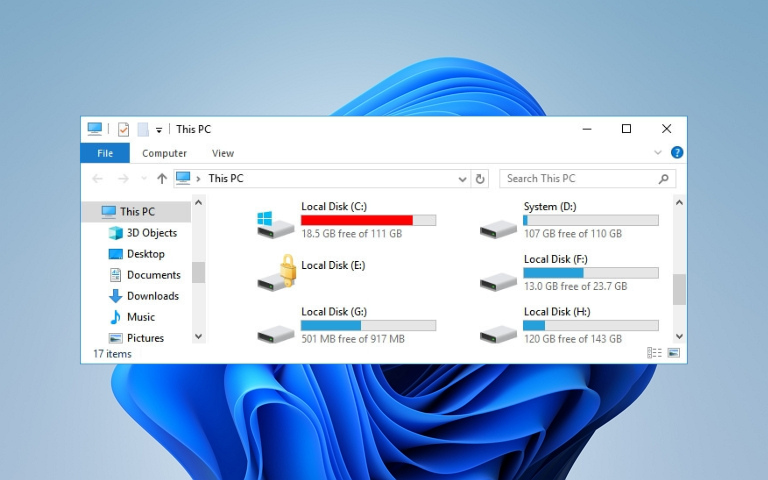
Fix 2. Check Your Disk Space
Windows updates, especially feature updates, require free disk space—usually 10–20GB. Insufficient storage is one of the most common reasons updates fail. By freeing up space, you remove a basic but critical obstacle to installation.
To check your storage:
Step 1. Open Settings
Step 2. Go to System > Storage
Step 3. Review available space on the C: drive
Step 4. If space is low:
- Delete temporary files
- Uninstall unused programs
- Move large files to an external drive or cloud storage
Step 5. Then try the update again.
Fix 3. Run the Windows Update Troubleshooter
Windows 11 includes a built-in Windows Update troubleshooter that automatically detects and fixes update problems. This is especially helpful for non-technical users, as it can repair misconfigured services or minor cache issues without running complex commands.
This won’t fix every problem, but it often resolves minor update errors and service issues.
To run the Windows update troubleshooter:
Step 1. Open Settings
Step 2. Go to System > Troubleshoot
Step 3. Click Other troubleshooters
Step 4. Find Windows Update
Step 5. Click Run
Step 6. Follow the on-screen instructions and restart your computer if prompted.
Fix 4. Repair System Files Using SFC and DISM
Corrupted or missing system files are a frequent cause of repeated update failures. Running SFC (System File Checker) and DISM (Deployment Image Servicing and Management) scans can restore these files, increasing the chances of a successful update.
This method is especially useful if Windows Update keeps failing with error codes.
To repair system files:
Step 1. Right-click the Start button
Step 2. Select Windows Terminal (Admin) or Command Prompt (Admin)
Step 3. Run the following command:
sfc /scannow
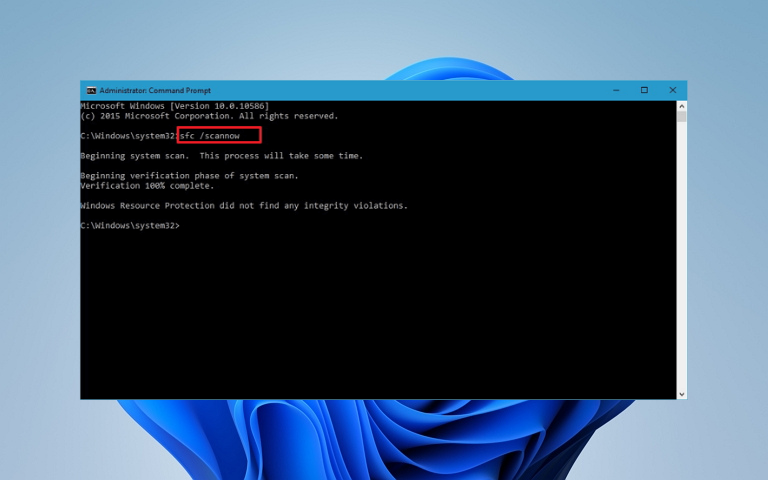
Step 4. Wait for the scan to finish. Then run:
DISM /Online /Cleanup-Image /RestoreHealth
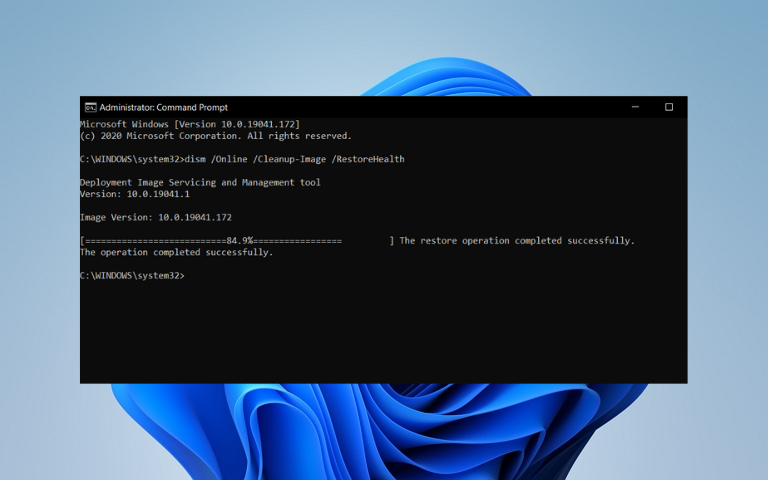
Step 5. After both commands complete:
- Restart your PC
- Try installing the update again
Fix 5. Temporarily Disable Antivirus or VPN
Security software, firewalls, and VPNs can interfere with updates or their installation. Temporarily disabling these programs removes a common source of conflict, often allowing updates to proceed.
If you’re using:
- Antivirus software
- Firewall tools
- VPN services
Try temporarily disabling them, then run Windows Update again.
Once the update is complete, remember to re-enable your security software.
Fix 6. Reset Windows Update Components
Resetting the update components clears the Windows Update cache and restarts critical services, which can fix persistent errors that previous methods couldn’t solve. This step is more technical but often necessary when updates repeatedly fail.
To reset the update components:
Step 1. Open Command Prompt as Administrator
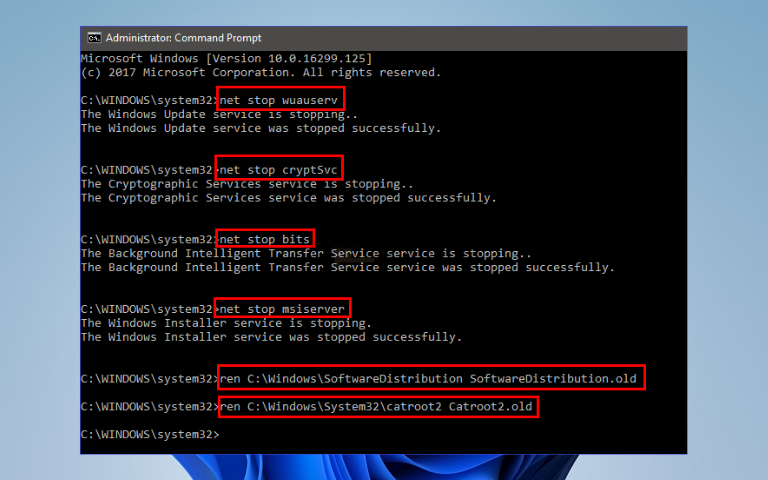
Step 2. Run the following commands one by one:
net stop wuauserv
net stop bits
net stop cryptsvc
net stop msiserver
ren C:\Windows\SoftwareDistribution SoftwareDistribution.old
ren C:\Windows\System32\catroot2 catroot2.old
Tip from Reddit: Some users delete the entire SoftwareDistribution folder instead of renaming it. Windows will recreate the folder automatically during the next update. This can sometimes resolve stubborn cache issues, but renaming is safer for most users.
Step 3. Restart your PC
Step 4. Check for updates again
This process clears the Windows Update cache and restarts the core services.
Fix 7. Install the Update Manually
Sometimes, Windows Update itself has trouble downloading or applying an update. Manually downloading the update ensures you get the full package and can bypass any caching or download issues.
To install the Windows 11 update manually:
Step 1. Open Settings → Windows Update
Step 2. Note the updated KB number
Step 3. Search for it in the Microsoft Update Catalog
Step 4. Download the correct version for your system
Step 5. Run the installer
Fix 8. Perform an In-Place Upgrade (Last Resort)
This is the ultimate solution for stubborn update failures. An in-place upgrade refreshes your system files, replaces damaged components, and ensures updates can install correctly—all while keeping your personal data and apps intact.
Many users report that this method fixes persistent Windows Update failures.
This process reinstalls Windows 11 while keeping:
- Your files
- Installed apps
- Settings
Basic steps:
Step 1. Download the Windows 11 ISO from Microsoft
Step 2. Double-click the ISO file
Step 3. Run setup.exe
Step 4. Choose Keep personal files and apps
Step 5. Follow the installation prompts
Common Windows Update Error Codes
If you see an error code during the update, it can help identify the issue.
| Error Code | Possible Cause | Notes / UGC Insights |
| 0x80070002 | Missing or corrupted update files | Many users report that renaming or deleting the SoftwareDistribution folder often resolves this issue. |
| 0x80070005 | Permission or access issues | Usually caused by insufficient user permissions, third-party antivirus, or firewall conflicts. |
| 0x800f081f | System files required for the update are damaged; running SFC/DISM can often fix them. | SFC/DISM repair usually resolves it; an in-place upgrade may be needed for stubborn cases. |
| 0x80248007 | Windows Update cache or database errors | Resetting Windows Update components or clearing the cache can help. |
| 0xC1900101 | Driver-related installation errors | Commonly caused by incompatible or outdated drivers (network, GPU, or storage drivers). |
| 0x80073712 | A background process is blocking the update; restarting or performing a clean boot often resolves the issue. | Corrupted system files required for the update |
| 0x80070020 | Another process is using a file | A background process is blocking the update; restarting or performing a clean boot often works. |
| 0x80070643 | Failed installation of .NET or MSI packages | Appears in cumulative or security updates; manual installation of the update may fix it. |
What If Windows 11 Update Still Keeps Failing?
In some cases, the issue isn’t your PC at all.
Certain updates just have bugs that affect specific hardware or configurations. When that happens, even perfectly working systems can fail to install them.
Your options then are:
- Wait for Microsoft to release a fixed update
- Skip the problematic update for now
- Use an in-place upgrade to repair the system
If the update isn’t security-critical, waiting for the next patch is often the easiest solution.

![How to Optimize SSD Read/Write Speed? [Expert Guide]](https://storedbits.com/wp-content/uploads/2024/08/cdm-result-768x449.png)